
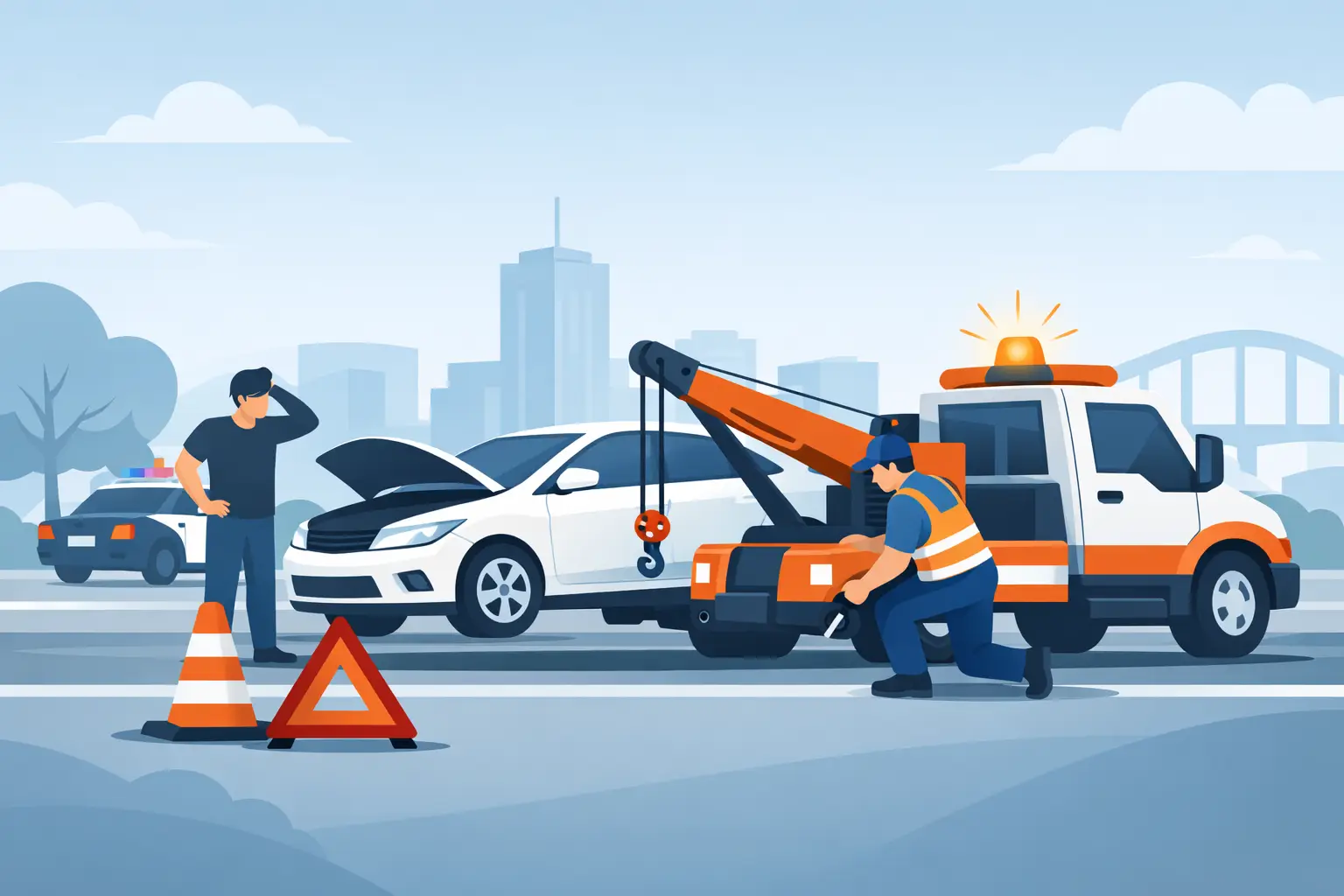
Emergency Towing Guide Richmond Drivers Need
A breakdown on I-95, a stalled car near Downtown, or a vehicle that will not restart in your own driveway can turn stressful fast. This emergency towing guide Richmond drivers can rely on starts with the one thing that matters most: get yourself and your passengers out of danger before worrying about the vehicle.
Towing is not always the first answer. A dead battery, flat tire, empty fuel tank, or lockout may be solved right where you are. But when your vehicle cannot be driven safely, calling for a local tow is the right move. Clear information and a calm plan can help get the right truck to you without wasted time.
First, Make the Roadside Safer
If your vehicle is still moving, do not slam on the brakes or make a sudden turn toward the shoulder. Ease off the accelerator, turn on your hazard lights, and move as far from traffic as safely possible. On busy Richmond routes, including I-95 and I-64, even a few extra feet away from the travel lane can make a meaningful difference.
Once stopped, put the vehicle in park, set the parking brake, and keep your hazards on. If you are in a safe location, remain inside with your seat belt fastened. Getting out near fast-moving traffic can be more dangerous than waiting in the car.
There are exceptions. If smoke is coming from the vehicle, you smell fuel, see flames, or your car is stopped in an active travel lane, get away from the vehicle as safely as you can. Move behind a guardrail if one is available, stay clear of traffic, and call 911 if there is an immediate danger or injury.
Your location matters more than most drivers realize. Look for a mile marker, exit number, nearby intersection, business name, or recognizable landmark. If you are in a parking lot or neighborhood, give the dispatcher the street address when possible. A description such as "near Broad Street" is a start, but the nearest cross street or a store name helps the tow operator find you faster.
What to Do Before You Request a Tow
Take a moment to look at the situation without trying to force a repair. Do not continue driving just because the car starts again if warning lights are on, the engine is overheating, the steering feels wrong, or a tire is badly damaged. A short drive can create a much larger repair bill.
When you call for help, have these details ready:
Your exact location, direction of travel, and a safe callback number.
Your vehicle year, make, model, color, and license plate if requested.
What happened, including warning lights, noises, collision damage, or whether the vehicle will start.
Where the vehicle needs to go, such as your home, a repair shop, dealership, or another safe location.
Any special conditions, including a low-clearance garage, locked wheels, all-wheel drive, or a vehicle that is in a ditch or parking deck.
You do not need to diagnose the mechanical issue. Saying "the car cranks but will not start" or "the temperature gauge is in the red" gives the operator useful direction. Honest details also help determine whether a jump start, tire service, fuel delivery, or towing is the best response.
Emergency Towing Guide Richmond: Choosing the Right Help
The right tow depends on your vehicle and the reason it stopped. For most modern vehicles, especially all-wheel-drive, luxury, electric, or low-clearance cars, a flatbed tow is often the safest option. The entire vehicle rides on the truck bed, avoiding unnecessary wear on the wheels or drivetrain.
A wheel-lift tow can be appropriate for many standard vehicles and can be a practical choice in tight spaces. The towing professional will decide what equipment is suitable based on your car's condition and where it is parked. If the vehicle is damaged, blocked in, or cannot roll, it may require additional recovery equipment. That can affect timing and price, so explain the situation clearly before the truck arrives.
Be careful with advice from strangers who offer to pull your car with a rope, chain, or personal truck. Improper towing can damage bumpers, transmission components, and suspension parts. It can also put people at risk on a crowded road. Professional towing is about more than moving a vehicle. It is about moving it safely.
If the issue might be simple, ask whether roadside service can be attempted first. A battery jump, spare tire installation, or a small fuel delivery may get you back on the road quickly. If the battery will not hold a charge, the tire sidewall is torn, or the engine has a serious problem, towing is the smarter choice.
Where Should Your Vehicle Be Towed?
A repair shop is usually the best destination when you already know who will inspect the vehicle and the shop is open or accepts after-hours drop-offs. Ask whether the shop has a key-drop process, where the vehicle should be left, and whether it can be accepted overnight. It is frustrating to pay for a tow only to find the lot is closed or inaccessible.
Towing to home can make sense if you need time to decide on repairs, have a trusted mechanic coming later, or the car can be safely parked off the street. This option may be especially useful after a late-night breakdown. Keep in mind that some neighborhoods, apartment communities, and streets have restrictions on disabled vehicles, so choose a legal and secure spot.
For a rental car, company vehicle, or leased vehicle, check your agreement or call the provider when you can. They may require a specific repair facility or have a roadside process. In a true safety emergency, get to a safe place first, then work through the paperwork.
How to Avoid Surprises During an Emergency Tow
Before service begins, ask for a clear explanation of the expected charge and what it covers. Towing costs can vary based on distance, vehicle type, time of day, access difficulty, and whether recovery work is needed. A straightforward answer from a local provider gives you a better sense of what to expect.
Confirm the destination address out loud. A simple mix-up between two similarly named streets can waste time and add miles. If your vehicle has personal items, remove valuables before it is loaded when it is safe to do so. Take photos of the vehicle's condition if it has collision damage or you want a record before transport.
You should also ask how you will receive updates if you need to leave the scene with family, police, or another ride. In many situations, you can ride with a friend or arrange transportation separately while the vehicle is delivered. Policies can vary, particularly when the tow truck is working on a highway or handling a damaged vehicle.
Special Situations That Need Faster Decisions
An overheating engine needs immediate caution. Turn off the air conditioning, pull over safely, and shut the engine down. Do not remove the radiator cap while the engine is hot. Letting the car cool may prevent further damage, but it does not necessarily mean it is safe to drive again.
After a crash, do not assume the car is drivable because it still starts. Fluid leaks, bent steering parts, damaged lights, and loose body panels can create risks you cannot see. If police are on scene, follow their direction about moving the vehicle. If it needs to be transported, tell the towing provider about collision damage so the right equipment can be dispatched.
For electric and hybrid vehicles, avoid improvised towing. These vehicles may have manufacturer-specific transport requirements, particularly if the battery housing is damaged after an impact. Tell the dispatcher exactly what you drive and whether it has been in a collision.
When You Need Help Now
A roadside emergency does not wait for business hours, good weather, or a convenient location. If your vehicle is disabled in Richmond or the surrounding RVA area, call for professional help as soon as you are safely positioned. Richmond Roadside provides 24/7 support for towing, jump starts, lockouts, flat tires, fuel delivery, and other urgent roadside problems.
Stay where you can be seen safely, keep your phone charged if possible, and give the clearest location details you can. Help is closer when the dispatcher knows exactly what happened and where to find you. The goal is simple: protect the people first, move the vehicle safely, and get you out of a stressful situation as quickly as possible.


Comments