
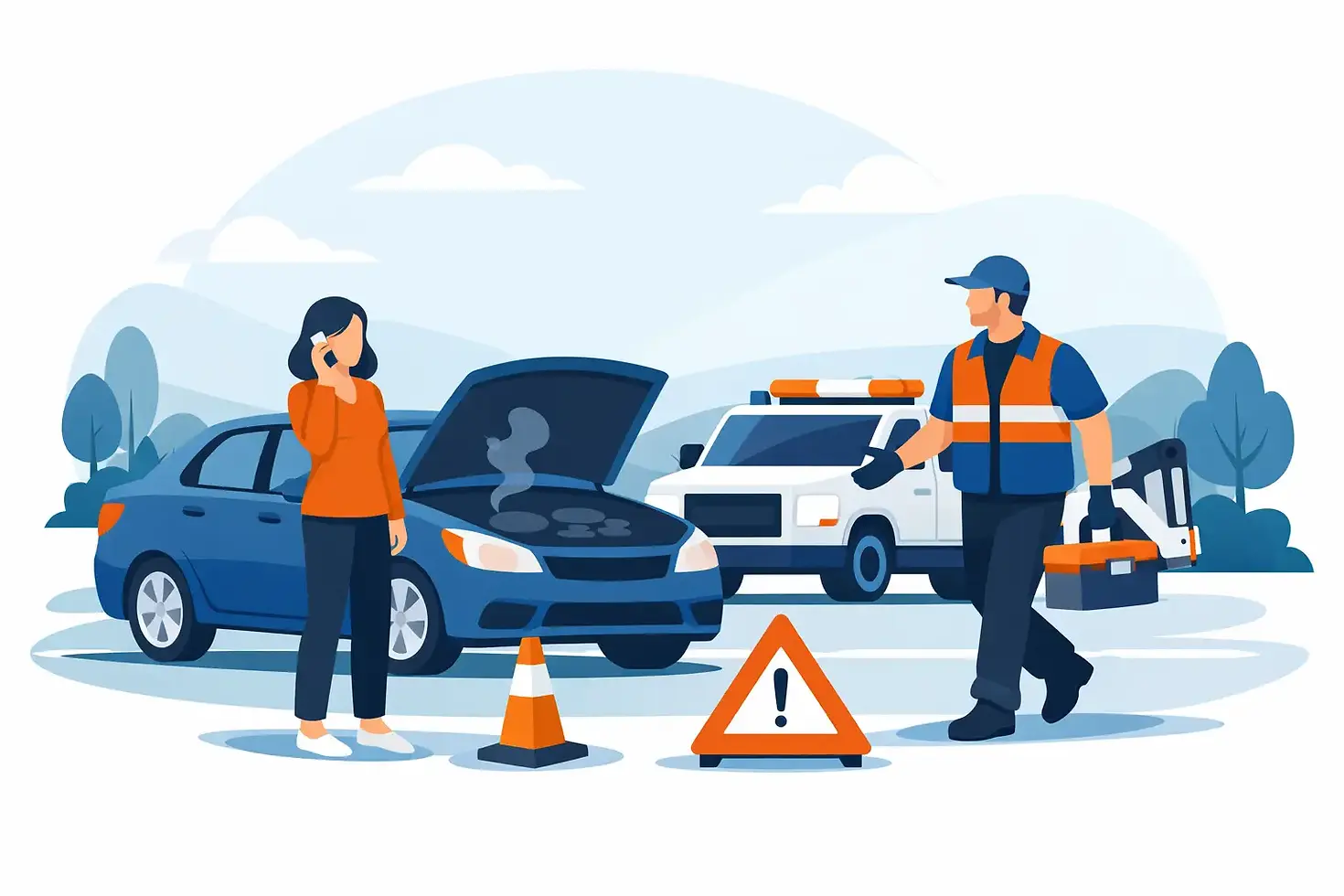
How Roadside Assistance Works When You Need Help
A dead battery in a grocery store parking lot feels very different from a dead battery on I-95 after dark. That is usually when people start asking how roadside assistance works - not in theory, but right now, with somewhere to be and a car that will not move.
The good news is that roadside assistance is built for exactly that moment. You call, explain the problem and your location, and a local service provider is dispatched to help. Depending on what went wrong, that might mean a jump start, lockout service, a tire change, fuel delivery, or a tow to a repair shop. The goal is simple: get you safe, get you moving if possible, and keep the situation from getting worse.
How roadside assistance works from the first call
Most roadside calls follow the same basic pattern, even though the details depend on the problem. First, the dispatcher asks where you are, what vehicle you have, and what happened. If you are on a highway shoulder, in a parking lot, at home, or in a garage, that changes the approach. A compact car with a flat tire is one kind of job. A disabled SUV that will not start in rush-hour traffic is another.
Once the dispatcher has the essentials, they assign a technician or tow operator with the right equipment. If the issue can be fixed on the spot, the technician comes prepared to handle it there. If the car cannot be safely driven, the call shifts toward towing. A good roadside company does not make you guess which one you need. They ask a few direct questions and guide you quickly.
Arrival time depends on traffic, weather, call volume, and where you are located. In a busy local service area, response is often faster than going through a national call center because the dispatch knows the roads, common traffic choke points, and how to reach places like apartment decks, downtown lots, and interstate shoulders without wasting time.
What roadside assistance usually covers
People often assume roadside assistance is just towing. In reality, towing is only one part of it. A lot of calls can be resolved where the vehicle sits, which saves time and money.
Lockout service
If your keys are inside the vehicle, roadside assistance can often unlock the door without damage. This is one of the fastest calls when the vehicle is accessible and there is no issue with a broken lock or key fob failure. If a child or pet is inside, say that immediately so the call is treated with extra urgency.
Jump starts and battery help
A battery that clicks but will not turn over is a classic roadside call. The technician tests the situation quickly and attempts a jump start. Sometimes that is all you need. Sometimes the battery is fully spent, the terminals are corroded, or there is a deeper electrical issue. That is where experience matters. A jump start can get you going, but it does not always solve the root problem.
Flat tire changes
If you have a usable spare, roadside assistance can install it and get you back on the road. If the spare is missing, damaged, or already flat, you may need a tow instead. This is one of those situations where expectations matter. Roadside service usually changes the tire with the spare you already have. It does not usually mean tire repair or replacement on the spot.
Fuel delivery
Running out of gas happens more often than people like to admit, especially in traffic-heavy areas or when a fuel gauge is not reading accurately. A roadside provider can bring enough fuel to get you to the nearest station. Diesel and gas mix-ups matter here, so the dispatcher will want the correct fuel type before sending help.
Towing
If the car cannot be safely started, driven, or repaired where it is, a tow is the next step. This can happen after an accident, a major mechanical failure, overheating, steering problems, or a tire issue with no spare. The tow operator loads the vehicle and brings it to your chosen destination, whether that is home, a shop, or another safe location.
How payment and coverage usually work
This is where drivers get confused, because roadside assistance is not always set up the same way. Some people have coverage through an auto insurance policy, a vehicle warranty, a credit card benefit, or a motor club membership. Others pay per call.
If you have a membership or policy benefit, there may still be limits. You might get a certain number of service calls per year, towing only up to a set mileage, or coverage only for specific vehicles. Some plans reimburse you after the fact rather than dispatching directly. That can be frustrating when you need immediate help, because reimbursement does not get a technician to your location any faster.
Pay-per-call service is more straightforward. You call, get a quoted price or pricing range based on the service, and pay for the help you need. For many drivers, that simplicity is a relief. There is no wondering whether your membership is active or whether the tow distance falls inside a benefit cap.
Why local roadside assistance often feels faster
When you are stranded, the quality of the dispatch matters almost as much as the technician. Large networks can work, but they often route calls through broad systems that cover multiple cities at once. That can mean longer wait times, less precise ETAs, or confusion about where exactly you are.
A local company that knows Richmond, nearby neighborhoods, and major routes like I-95 can usually move with more urgency and fewer handoffs. If you say you are near Downtown Richmond, stuck outside an apartment complex, or pulled over near an interchange, a local dispatcher understands the context right away. That saves time when time matters.
For drivers in stressful situations, that local knowledge also feels more human. You are not explaining your emergency to three different people. You are asking for help from someone who knows the area and is focused on getting to you.
What to do while waiting for roadside assistance
Knowing how roadside assistance works also means knowing your role while help is on the way. Safety comes first. If the vehicle can be moved, get it as far from traffic as possible. Turn on your hazard lights. If you are on a high-speed roadway and it is unsafe to stay in the car, move to a protected area away from traffic when possible.
Keep your phone available and volume on, because the driver or dispatcher may call for clarification. Have your vehicle make, model, color, and exact location ready. Landmarks help. So do mile markers, cross streets, and business names nearby.
If you are in a parking garage, at a gated property, or in a place with difficult access, mention that early. It is a small detail that can save a lot of delay.
When roadside assistance can fix the problem - and when it cannot
This is one area where honesty matters. Roadside assistance is designed to solve common emergencies fast, but not every breakdown can be repaired on the shoulder or in a driveway.
A lockout, jump start, fuel delivery, or spare tire install is often straightforward. But if the alternator failed, the engine overheated badly, the transmission is slipping, or the tire blew out and damaged the wheel, the safest answer may be towing. The best roadside providers do not force a quick patch when the vehicle is not roadworthy. They make the safer call.
That can be frustrating if you hoped for a simple fix, but it is better than getting a temporary start only to break down again a mile later. Good service is not just about speed. It is about judgment.
How roadside assistance works best for real emergencies
The strongest roadside support feels simple because someone else takes control of the logistics. You call. They ask the right questions. They send the right help. You are not left comparing five apps, reading policy fine print, or trying to change a tire beside moving traffic.
That is why many drivers choose direct, local service when the problem is happening now. If you are stuck in Richmond or the surrounding area, Richmond Roadside is built around that exact need - fast response, straightforward service, and real help without extra friction.
Car trouble rarely shows up at a convenient time. But when you know what happens after the call, the whole situation feels a little more manageable, and that first step gets easier.


Comments